
Whether you are launching a custom combat sports brand or curious about the craftsmanship behind professional fight gear, understanding how to make boxing gloves requires a look inside professional precision manufacturing.
Making high-performance boxing gloves requires a delicate blend of skilled artisan craftsmanship and precise engineering. Every step—from initial design intake to final quality checking—directly impacts wrist support, knuckle protection, and glove durability.
Here is an insider’s look at the complete step-by-step manufacturing process of custom boxing gloves.
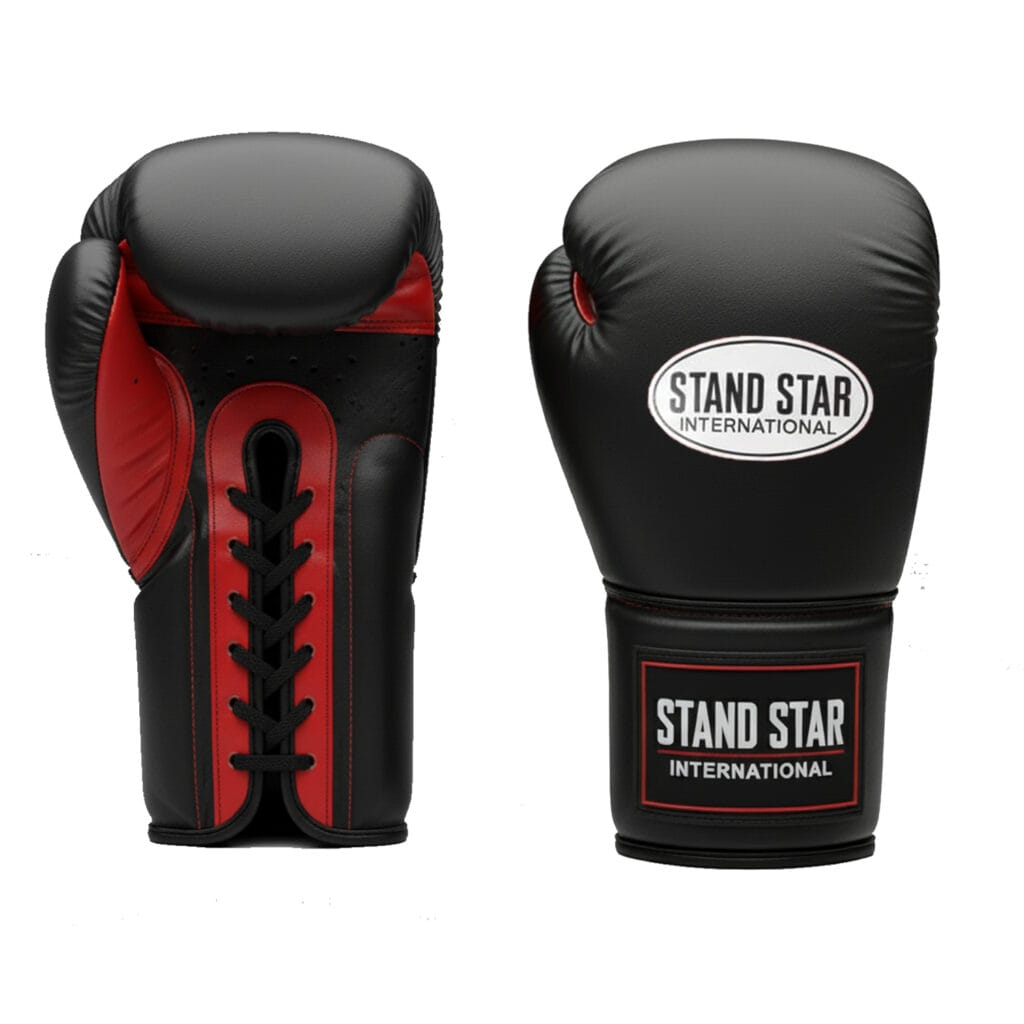
Step 1: Client Design Intake & Custom Pattern Making
The production journey begins with the customer’s vision.
[ 1. Tech Pack Intake ]
⬇
[ 2. CAD Pattern & Stencils ]
⬇
[ 3. Leather & Material Cutting ]
⬇
[ 4. Custom Branding & Printing ]
⬇
[ 5. Panel Stitching & Shell Assembly ]
⬇
[ 6. Padding Core Insertion (IMF / Multi-Layer) ]
⬇
[ 7. Wrist Closure, Strap & Piping Trim ]
⬇
[ 8. Quality Audit & Weight Verification ]
⬇
[ 9. Packaging & Hangtag Attachment ]
⬇
[ 10. Export Boxing & Overseas Shipping ]
- Tech Pack Intake: The customer submits a detailed design specifying logo placement, color choices, closure preference (hook-and-loop strap vs. lace-up), and target glove weight (2 oz to 18 oz).
- Custom Patterning: Skilled pattern makers create customized 2D templates for every part of the glove, including the outer shell, thumb piece, wrist cuff, palm, and inner lining.
Step 2: Leather Selection & Material Inspection
The longevity and feel of a boxing glove depend heavily on the raw materials chosen to meet customer requirements:
- Genuine Leather (Cowhide / Goat / Sheepskin): Manufacturers prefer genuine leather for premium fight gloves because it offers superior durability, natural breathability, and excellent break-in capability.
- Synthetic Leather (Microfiber / PU / PVC): A cost-effective, high-durability, and vegan-friendly alternative ideal for high-volume training gloves.
- Inner Lining Material: Craftsmen prepare moisture-wicking nylon or polyester lining to prevent sweat absorption and sweat damage over time.
Before cutting, inspectors examine every leather hide to ensure uniform thickness and confirm it has no surface blemishes.
Step 3: Precision Leather Cutting
Using sharp steel dies with heavy hydraulic presses (or high-precision CNC laser cutters), technicians cut the approved material into individual glove panels:
- Main shell (back of hand & knuckles)
- Palm and thumb panels
- Wrist cuff and closure strap
- Internal lining pieces
Precise cutting ensures that left and right gloves maintain perfect symmetry in weight and shape.
Step 4: Printing & Custom Branding
Before stitching the panels together, workers apply all custom branding while the cut pieces lie flat:
- Screen Printing: Ideal for placing crisp, high-contrast brand logos on the wrist strap or back-of-hand.
- Embossing / Debossing: Gives logos a raised 3D texture directly on genuine leather.
- Woven Labels: Workers prepare premium woven brand tags to stitch onto the wrist cuffs.
Step 5: Pre-Assembly & Initial Stitching
Artisans stitch the flat individual leather pieces together using high-tensile, heavy-duty nylon thread to prevent bursting under impact:
- Palm Assembly: Artisans stitch the palm panel together and insert breathable mesh or air vents for ventilation.
- Thumb Construction: Workers assemble the thumb section and attach it using a safety-lock design to prevent thumb sprains during sparring.
- Lining Attachment: Tailors stitch the moisture-wicking inner fabric directly to the inner panels.
Step 6: Padding & Mold Filling Process
The core protective element of any boxing glove is its padding system. Depending on the intended use (sparring, training, or professional fight), manufacturers apply one of three primary filling methods:
| Padding Type | Manufacturing Method | Best Used For |
| Injection Molded Foam (IMF) | Technicians inject pre-shaped liquid polyurethane foam directly into a single unified glove mold. This ensures consistent density and weight. | Heavy bag training & high-volume gym gloves |
| Layered Multi-Foam (Handmade) | Artisans hand-laminate multiple sheets of EVA foam, latex, and memory foam together in specific density layers. | Professional fight gloves & high-end sparring gloves |
| Horsehair Blend (Traditional) | Workers combine layered horsehair with thin foam layers to create a firm, puncher’s-style glove. | Title fight & professional contest gloves |
Technicians carefully insert the custom padding core into the stitched outer shell casing.
Step 7: Final Stitching & Wrist Closure Installation
Once the padding sits securely inside the leather shell:
- Wrist Closure Fitting: Workers fit high-density foam inserts along the wrist cuff for structural wrist support.
- Strap Installation: Tailors stitch either industrial-grade hook-and-loop Velcro or traditional lace-up tracking onto the cuff.
- Piping & Final Trim: Artisans wrap a heavy-duty leather or PU piping trim around the raw edge of the cuff and secure it with double-needle stitching to cleanly seal all interior layers.
Step 8: Quality Control, Inspection & Final Packing
Before leaving the factory floor, every pair undergoes strict quality testing:
- Weight Verification: Inspectors weigh left and right gloves on digital scales to ensure exact weight compliance (e.g., exactly 14 oz within $\pm 2\text{ g}$ tolerance).
- Stitch & Seam Audit: Auditors check for uniform thread tension, double-stitched stress points, and overall symmetry.
- Finishing & Cleaning: Workers condition the leather, wipe it clean, and remove any stray threads.
- Custom Packing: Workers insert gloves into breathable mesh carrying bags or custom polybags with brand hangtags, then box and seal them for export delivery.
Ready to Manufacture Your Own Custom Boxing Gloves?
Understanding the detailed engineering behind boxing glove manufacturing makes all the difference when sourcing custom gear. From precise pattern cutting to high-density foam selection, attention to detail is what separates average gloves from professional-tier equipment.