
Why Do Different Types of Boxing Gloves Exist?
Types Of Boxing Gloves: Beginners often assume one pair of gloves can handle every workout. However, using the wrong glove invites injury and quickly destroys your gear. Manufacturers engineer distinct gloves to manage different impact dynamics:
- For Heavy Bag Work: Gloves require dense foam to absorb massive force and protect your knuckles.
- For Sparring: Gloves feature soft, pillowy padding to protect your training partner’s face and body.
- For Competition: Gloves use lightweight profiles to maximize punching speed and accuracy.
1. Training Boxing Gloves (The All-Purpose Workhorse)
When someone asks which glove best suits a beginner, coaches almost always point to Training Gloves.
Training gloves serve as versatile hybrids. They act as the “jack-of-all-trades” in the combat sports world.
What Fighters Use Them For
Training gloves provide balanced padding for basic heavy bag work, focus mitt drills, and general fitness boxing classes. They offer reliable, all-around protection without specializing too heavily in one area.
Key Features
- Versatility: Handles almost every gym activity with ease.
- Balanced Padding: Offers enough firmness for bag work while staying soft enough for light technical sparring (at 16 oz).
- Durability: Manufacturers construct them with resilient materials to endure daily gym wear.
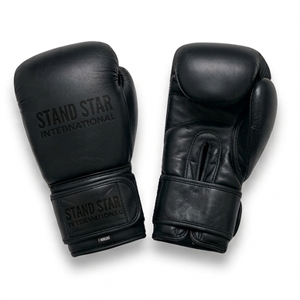
2. Sparring Boxing Gloves (Engineered for Partner Safety)
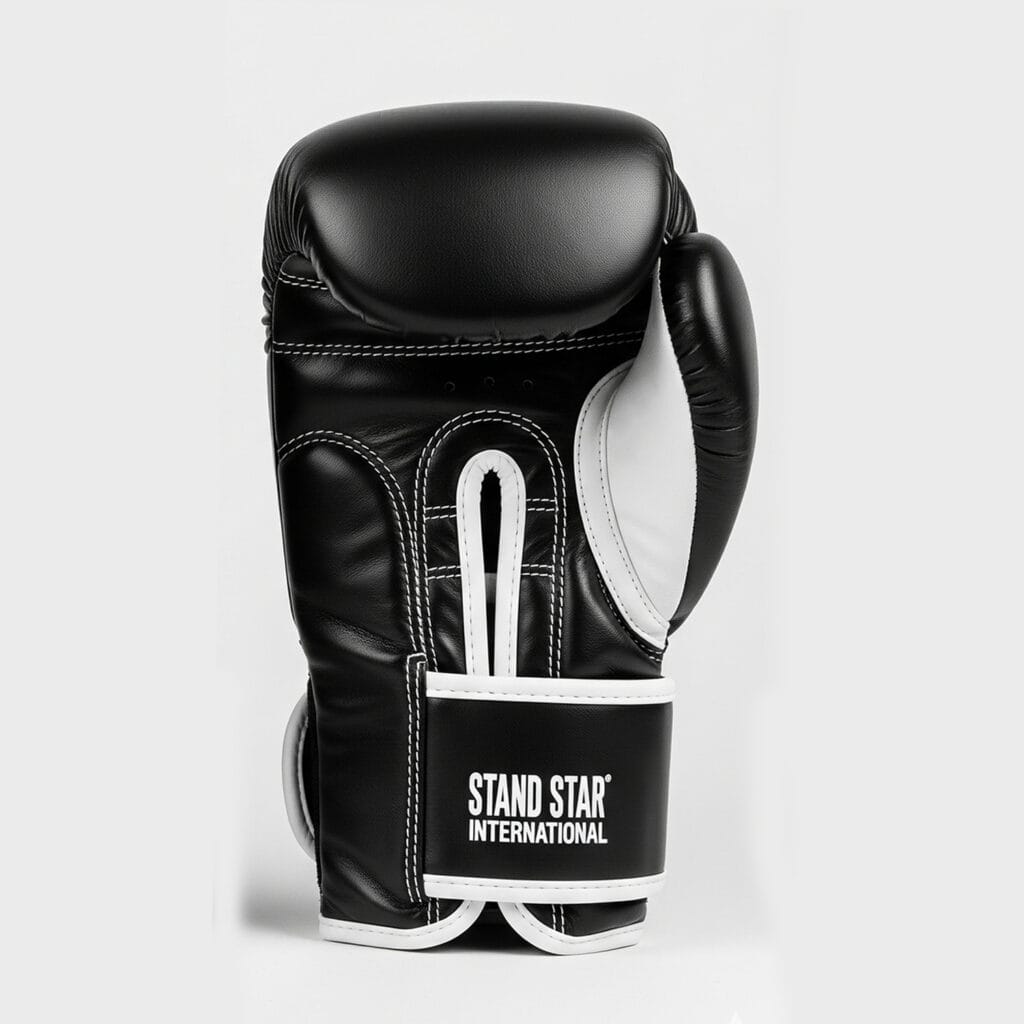
If your routine involves hitting a real person, a dedicated pair of Sparring Gloves is mandatory in most reputable gyms. Their primary mission focuses entirely on safety—protecting your hands while shielding your partner from cut and concussion risks.
Important: Never use compact bag gloves for sparring; their hard surface increases injury risks for your partner.
What Fighters Use Them For
Controlled, partner-based combat training. Manufacturers distribute the padding across the knuckle wall to disperse kinetic force upon impact.
Key Features
- Softer Padding: Uses extra shock-absorbing, high-density foam.
- Heavier Weight: Typically ranges between 14 oz, 16 oz, or 18 oz, with 16 oz acting as the standard requirement in professional gyms.
- Reinforced Support: Features extended wrist cuffs to stabilize your joints during erratic sparring exchanges.
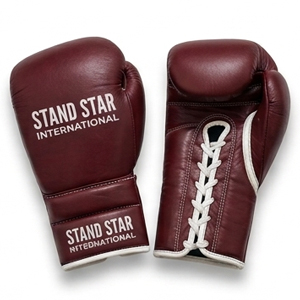
3. Heavy Bag Gloves (Built for Durability)
Unlike sparring gloves, Heavy Bag Gloves withstand the brutal, repeated impact of hitting dense targets. Their primary goal centers on long-term hand endurance and knuckle defense.
If you regularly hit a heavy bag with sparring gloves, the dense bag target will quickly crush and harden your soft sparring foam, making those gloves unsafe for partner work.
What Fighters Use Them For
Strictly for training on heavy bags, Thai pads, and focus mitts. Designers engineer them to absorb thousands of high-power strikes.
Key Features
- Dense Foam Core: Features firm, highly resilient foam layers that maintain their shape over time.
- Fighter Protection: Cushions the wearer’s knuckles rather than softening the landing for a target.
- Reinforced Construction: Experienced manufacturers heavily stitch stress points around the thumb and wrist to ensure long service life.
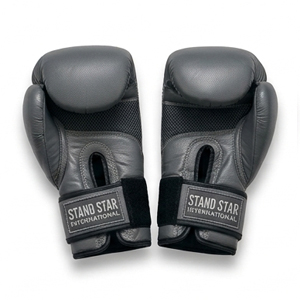
4. Competition Boxing Gloves (Professional & Amateur)
Governing federations strictly regulate Competition Gloves regarding weight, material makeup, and outer dimensions. Unlike training gear, manufacturers build competition gloves for ring performance rather than long-term gym endurance.
Professional Fight Gloves
These compact, specialized gloves maximize power delivery and hand speed. Designers place less emphasis on overall hand padding and durability because fighters use them for a single fight night.
- Key Features: Lightweight (typically 8 oz or 10 oz), lace-up closures, and minimal foam over the striking surface for maximum power transfer.
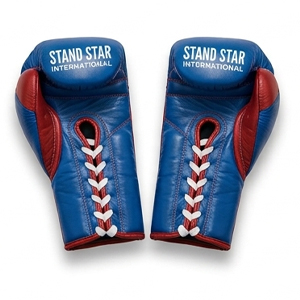
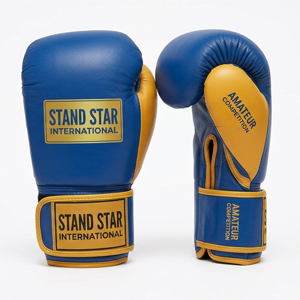
Amateur Boxing Gloves
Amateur gloves prioritize athlete safety over sheer knockout power. Federation rules require a distinct design featuring a white knuckle target region to help judges score clean strikes.
Key Features: Superior shock-absorption foam, standard 10 oz or 12 oz sizing, and strict compliance with national or Olympic federation standards.
5. Specialized Striking Gloves
While the options above handle classic boxing needs, specific combat disciplines require custom glove builds.
Muay Thai Gloves
Muay Thai gloves differ from traditional boxing gloves because they accommodate active clinching. Manufacturers shape the padding into a rounder profile to block kicks, while using shorter, more flexible cuffs that let fighters grapple and strike with elbows freely.
MMA Striking Gloves
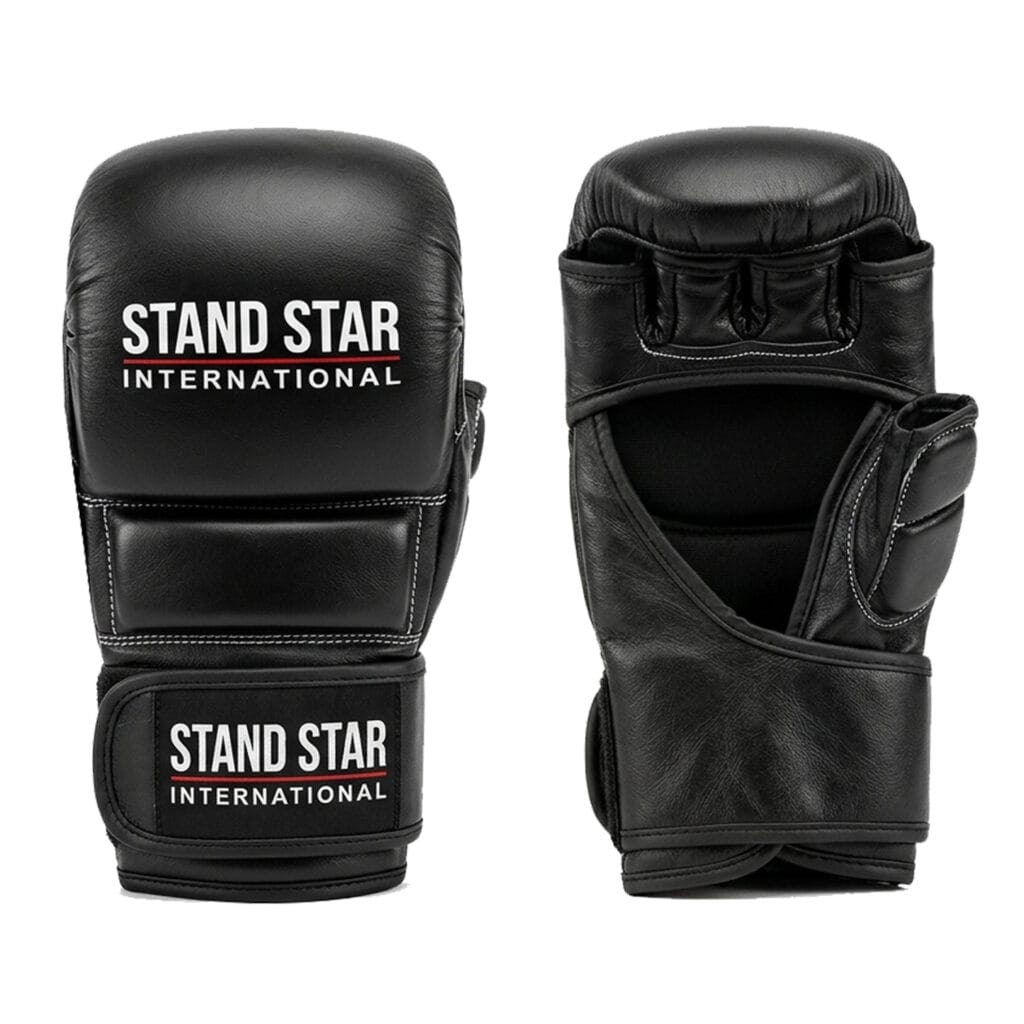
MMA gloves feature open-finger designs that let fighters execute wrestling takedowns and submissions while still offering essential knuckle protection during striking exchanges.
Choosing the Right Closure System: Lace-Up vs. Velcro
Once you select your ideal glove style, you must choose between two main closure systems.
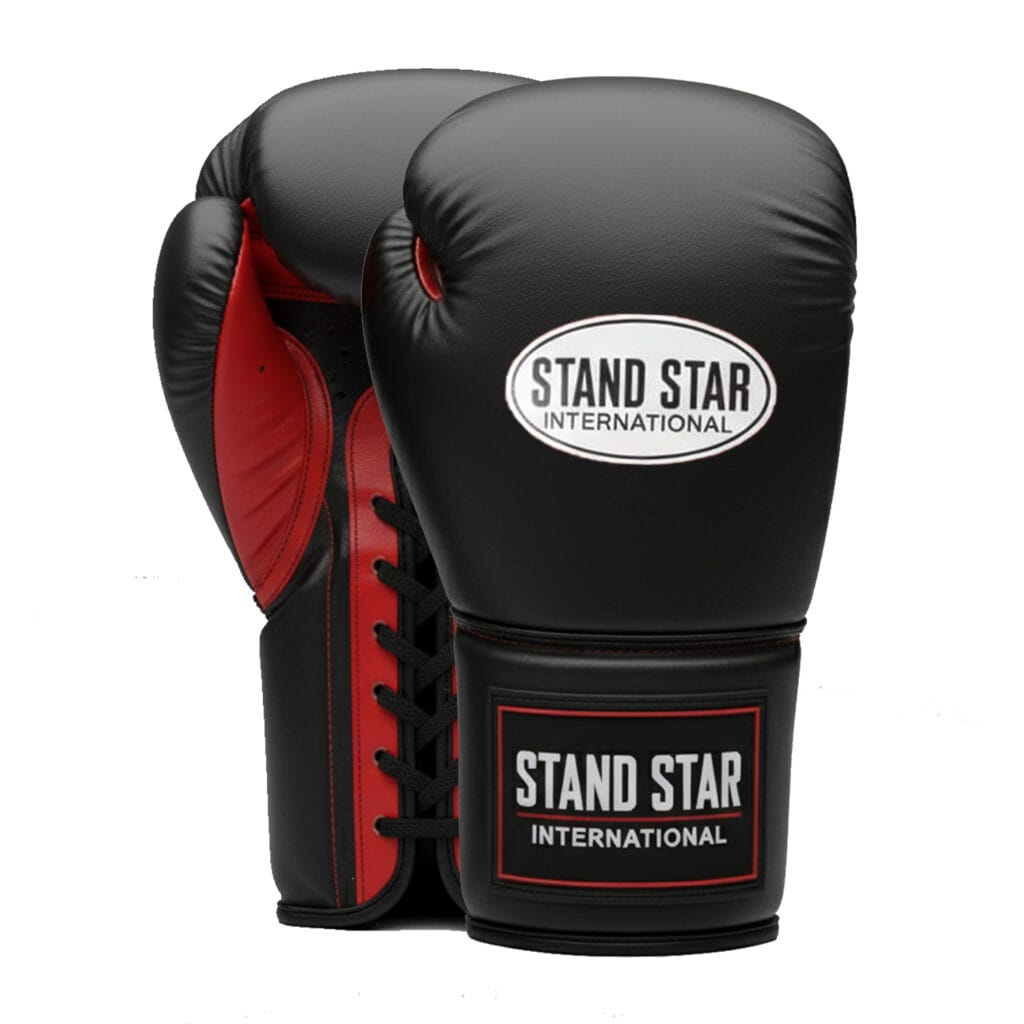
Lace-Up Closures
Lace-up gloves remain the gold standard for professional fights and serious sparring. They deliver a snug, custom fit along the forearm that Velcro cannot duplicate.
- Trade-off: You cannot put them on or take them off independently; you will always need help from a coach or training partner.
Velcro (Hook-and-Loop) Closures
Velcro gloves provide unmatched convenience for everyday gym workouts. You can slip them on and off in seconds between conditioning circuits.
- Trade-off: Modern Velcro offers great support, but it still delivers slightly less wrist rigidity than a pulled-tight lace system.
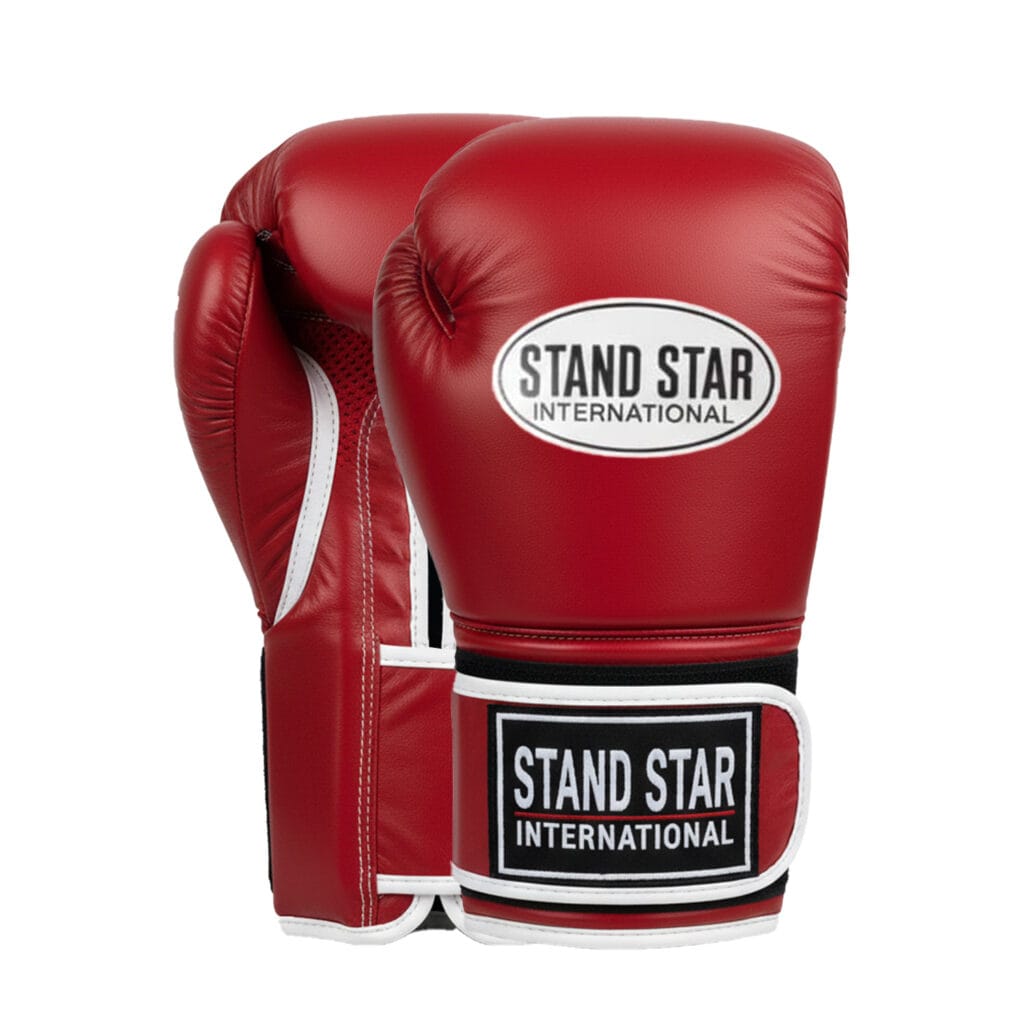
Summary of Boxing Glove Types
| Glove Type | Primary Purpose | Main Focus | Typical Weights | Best Closure |
| Training | General gym workouts, mitts, classes | Versatility & Balance | 12 oz – 16 oz | Velcro |
| Sparring | Partner combat drills & practice fights | Partner Safety & Shock Absorption | 16 oz+ | Lace-Up (Ideal) |
| Heavy Bag | Punches against heavy bags & pads | Knuckle Endurance & Protection | 10 oz – 14 oz | Velcro or Lace-Up |
| Competition | Official sanctioned matches | Speed & Punch Efficiency | 8 oz – 10 oz | Lace-Up |
Frequently Asked Questions
How many main types of boxing gloves are there?
There are 6 primary types of boxing gloves: training gloves, sparring gloves, heavy bag gloves, competition gloves, fitness gloves, and amateur competition gloves.
Can I use one pair of gloves for everything?
A good pair of training gloves can handle light bag work and pad drills. However, dedicated heavy bag gloves and sparring gloves deliver better protection and last much longer.
Which gloves offer the best safety for sparring?
Sparring gloves offer the safest option because manufacturers construct them with soft, shock-absorbing foam designed to minimize impact force on your partner.
What glove weight should beginners buy?
Most adult beginners should start with 14 oz or 16 oz training gloves. This weight range provides ample padding to protect your hands while building shoulder conditioning.
Conclusion: Investing in Quality Manufacturing
Your choice of boxing gloves directly impacts your speed, hand safety, and training longevity. Most fighters start with a versatile pair of 14 oz or 16 oz training gloves before building a dedicated gear set.
Always prioritize high-quality manufacturing when choosing equipment. Premium gloves crafted by experienced manufacturers feature precise stitching, multi-layer foam cores, and secure wrist support—ensuring your gear stands up to heavy daily training year after year.